The Epstein Shadow: When Timing Becomes a Political Tool
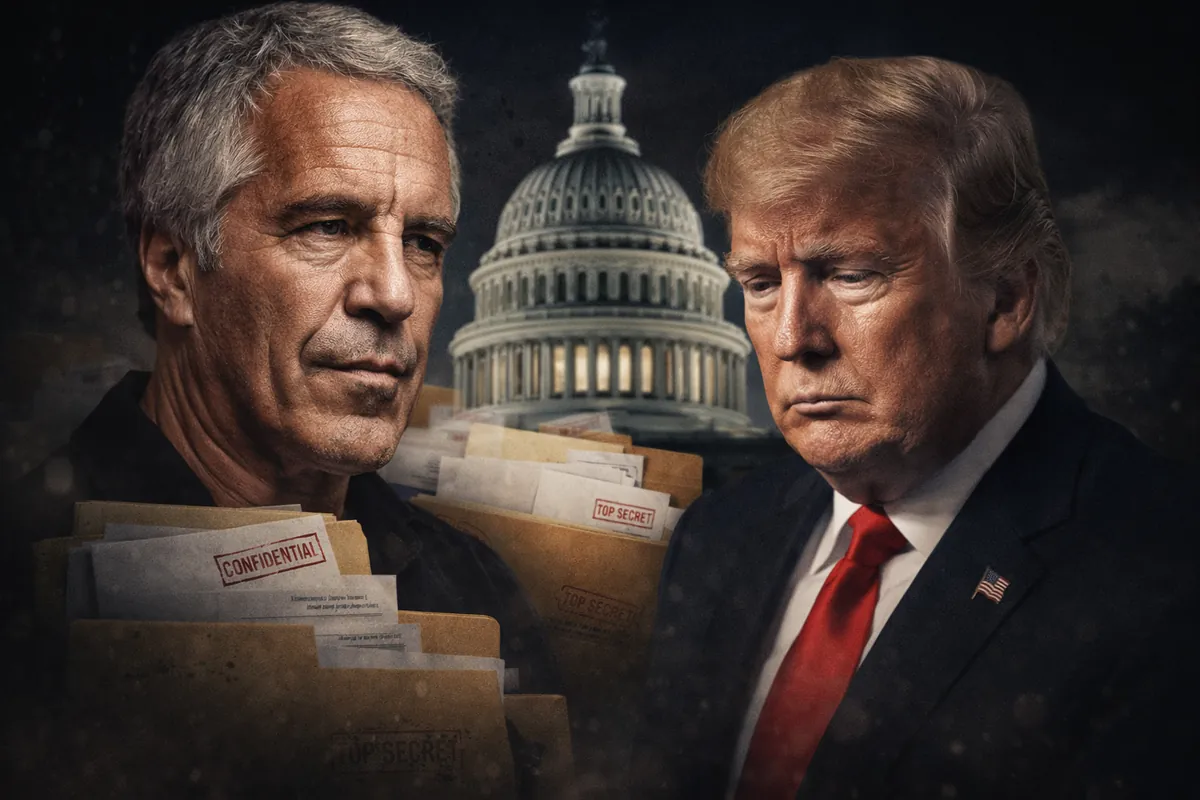
In politics, the weight of a file is not defined solely by its contents, but by the moment it re-enters public circulation. Cases that are never fully closed do not disappear; they remain dormant, retrievable, and increasingly consequential over time.
From this perspective, the recurring reappearance of the Jeffrey Epstein case cannot be understood as a series of isolated news events. What matters is the pattern: its return at moments of heightened political sensitivity.
Timing as an Unspoken Message
Political communication research has long shown that disclosures are rarely random. Selective releases of information often function as a form of indirect pressure, shaping the environment in which decisions are made without openly confronting decision-makers.
The objective is not necessarily to alter facts, but to reshape the psychological and political climate surrounding moments of war, arms negotiations, or strategic realignments.
– The Pentagon Papers surfaced during negotiations to end the Vietnam War, not after.
– The Iran–Contra affair exploded amid intense internal conflict over U.S. foreign policy.
– The Snowden disclosures coincided with sensitive global cybersecurity negotiations.
In each case, the central question was not what was revealed, but why it was revealed then.
Why Some Files Never Die
The difference between a closed case and an open one is not merely legal. A closed file is archived; an open file remains politically reusable.
In the Epstein case, documents were not released in a single, definitive act. They emerged gradually, heavily redacted, and unevenly distributed. This approach generates uncertainty rather than closure. In politics, uncertainty is not a void—it is leverage.
Networks Matter More Than Individuals
Focusing exclusively on individual names often obscures the larger structure. Modern power operates through networks: financial ties, informal intermediaries, and unofficial channels that exist beyond formal governmental oversight.
Within such systems, sensitive files—especially those involving moral or sexual scandals— become potent instruments of influence, not through explicit threats, but through the persistent possibility of renewed exposure.
Media, Pressure, and Decision-Making
Media coverage does not occur in isolation. The timing, intensity, and framing of reporting all shape the conditions under which political choices are made.
When unresolved cases resurface alongside debates over war, arms transfers, or major legislative decisions, they exert indirect pressure, even in the absence of coordinated intent.
From this angle, the Epstein case belongs to a broader phenomenon: politics conducted not through accusation, but through implication and timing.
A Pattern, Not an Accusation
This analysis does not offer judicial conclusions, nor does it claim proof of organized blackmail. Instead, it identifies a recurring political pattern:
- Files that remain legally unresolved
- Staggered and selective disclosures
- Long periods of silence interrupted by sudden visibility
- Reappearances aligned with critical decision points
Taken together, these elements suggest that timing itself has become part of modern political power.
Conclusion
In contemporary politics, power is not always exercised directly. Sometimes it is enough for a file to remain open, a drawer unlocked, and documents retrievable.
Viewed this way, the Epstein case is no longer only a scandal from the past. It is a case study in how ambiguity, timing, and controlled silence can function as tools within the architecture of political decision-making.
For a related analysis on how digital platforms have become arenas of political conflict,
read also:
How TikTok Became a New Battleground in U.S. Political Conflict