TikTok in the United States
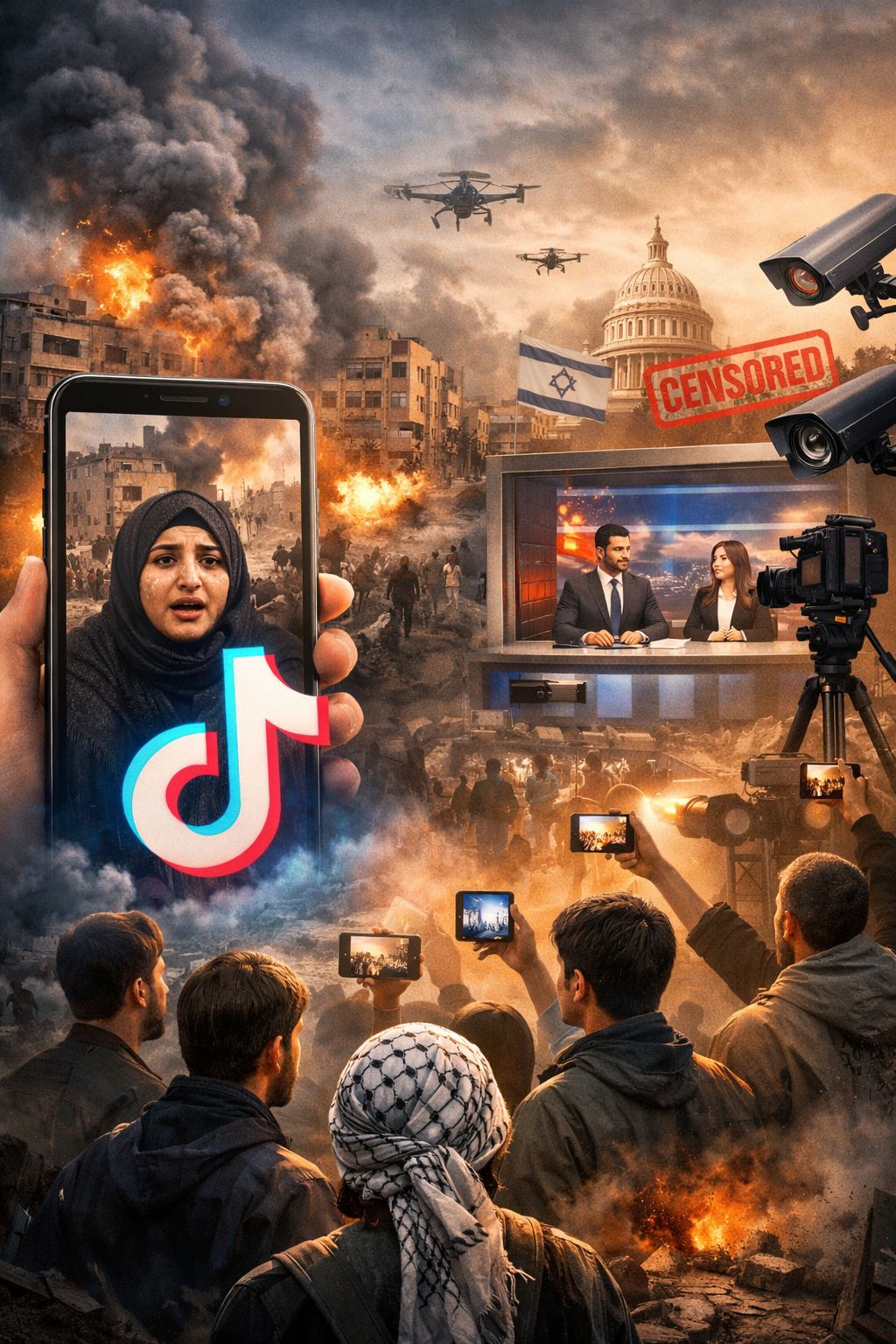
TikTok and the Breaking of Media Monopoly
This shift reflects broader cultural changes described in The End of Automatic Trust , where younger generations increasingly question institutional narratives and seek alternative sources of meaning and information.
During the assault on Gaza, TikTok played a pivotal role in sharing on-the-ground footage and firsthand testimonies that traditional media largely ignored. Millions of users were exposed to Palestinian human rights content, leading to a noticeable shift in global public sentiment, particularly among younger generations.
This shift did not go unanswered. Israeli officials, including Benjamin Netanyahu, openly acknowledged that the conflict was no longer purely military but had become a battle over awareness and narrative. Digital platforms, especially TikTok, were described as arenas being used against Israel. This discourse targeted not only the platform itself, but a young audience increasingly questioning long-standing media assumptions,an issue previously examined by GENZGATE in its analysis on the erosion of automatic trust.
From Security Risk to Narrative Threat
This transformation also aligns with the broader global context outlined in The World Is Not at War , It Is in Transition , which explores how political, media, and social systems are undergoing structural change rather than isolated conflict.
Official U.S. rhetoric focused on data protection and national security, yet the timing of the deal raises serious questions. The surge in pro-Palestinian content and the decline of traditional Israeli narratives among youth turned TikTok into a political issue long before it became a technical one.
The concern was no longer simply that the app was Chinese-owned, but that it allowed Palestinians and their supporters to communicate their narrative beyond traditional media control,at a moment when political awareness intersected with collapsing trust in major institutions among an entire generation.
Before examining specific policies and statements, it is important to recognize the broader sensitivity surrounding this debate. Discussions about Zionism, antisemitism, and state policy often become emotionally charged, not because they lack complexity, but because they intersect with identity, historical trauma, and deeply held narratives. Understanding this context is essential to engaging with the issue critically rather than reactively.
Recent Statements and the Ban on Anti-Zionism
Recent executive statements by TikTok regarding the prohibition of what is labeled as anti-Israel or anti-Zionist content mark a dangerous turning point. They deliberately blur the line between antisemitism,which is morally unacceptable,and legitimate criticism of a state or political ideology.
This conflation effectively criminalizes Palestinian discourse and frames documentation and political protest as hate speech, further deepening the trust crisis between users and digital platforms,particularly among a generation that no longer accepts media guardianship or prepackaged narratives.
What Changed After the Deal
Following the transfer of control to a U.S.-based entity, content policies became more responsive to domestic political pressures. Censorship is no longer always explicit; it often manifests through reduced reach, shadow suppression, or account restrictions.
These mechanisms rarely silence voices outright, but they systematically weaken their impact, quietly reshaping the public sphere at a time when users are increasingly aware of,and skeptical toward,platform neutrality.
Who Is Actually Being Targeted
The primary target is not genuine hate speech, but rights-based and documentary content, along with the young voices that succeeded in challenging dominant narratives. The deal was not solely about data protection,it was about recalibrating narrative control in a world redefining trust, power, and meaning.
What Users Can Do
In response, users must avoid reliance on a single platform, document any content restrictions, and build diversified distribution networks. The digital battle over awareness has become a central front in global conflicts of perception.
Conclusion
The TikTok deal in the United States does not signal the end of the crisis, but the beginning of a more complex phase. Platforms may not be banned outright, but they are reshaped. Voices may not be silenced instantly, but their reach is gradually diminished.
Yet one reality remains clear: the Palestinian narrative that reached the global public will not easily return to the shadows,especially in an era witnessing the end of automatic trust and the rise of critical awareness among younger generations.