Global Shifts in 2026: Economy, Politics, and the Middle East

The world of 2026 looks markedly different from just a few years ago. Crises are no longer isolated events but part of a broader global reality shaped by instability, accelerated political change, and deeply interconnected regional and international challenges.
What we are witnessing is not global chaos, but a complex transitional phase in which power balances are being recalibrated, state roles are shifting, and technology is reshaping politics, economies, and societies.
A Slower Global Economy and Uneven Opportunities
The global economy is not collapsing, but it no longer operates at its previous pace. Growth has slowed, inflation remains persistent, and the gap between countries able to leverage technology and those burdened by ongoing crises continues to widen.
For Gen Z, this environment presents serious challenges in the labor market, while simultaneously opening new pathways through non-traditional work, digital skills, and flexible career models.
Politics Returns to the Center
Political decisions now directly shape daily life — from energy and food prices to travel, employment, and the digital space. This convergence of politics and everyday reality has fueled a growing erosion of trust in institutions, media, and official narratives across many societies.
Calculated Escalation and Strategic Messaging
Recent exchanges between the United States and Iran have once again elevated regional tensions. While these signals do not necessarily point to imminent confrontation, they underscore the fragility of the existing balance and reinforce uncertainty across the Middle East.
The Middle East at the Core of Global Change
The region is not peripheral to global transformations; it reflects them with clarity. Tensions involving Israel and Hezbollah, alongside indirect confrontations between major powers, make the Middle East highly sensitive to strategic miscalculations.
Iraq and Gen Z: Early Awareness in a Complex Environment
In Iraq, global transformations intersect with a deeply complex domestic reality. Iraqi Gen Z has grown up amid political volatility, economic pressure, and fluctuating institutional trust, fostering a generation that is cautious, observant, and less inclined toward automatic confidence in authority.
Rather than disengagement, this reflects reassessment. Young Iraqis increasingly compare global experiences, seek alternative knowledge sources, and pursue more independent personal and professional pathways.
Iraq at the Center of the Geopolitical Landscape
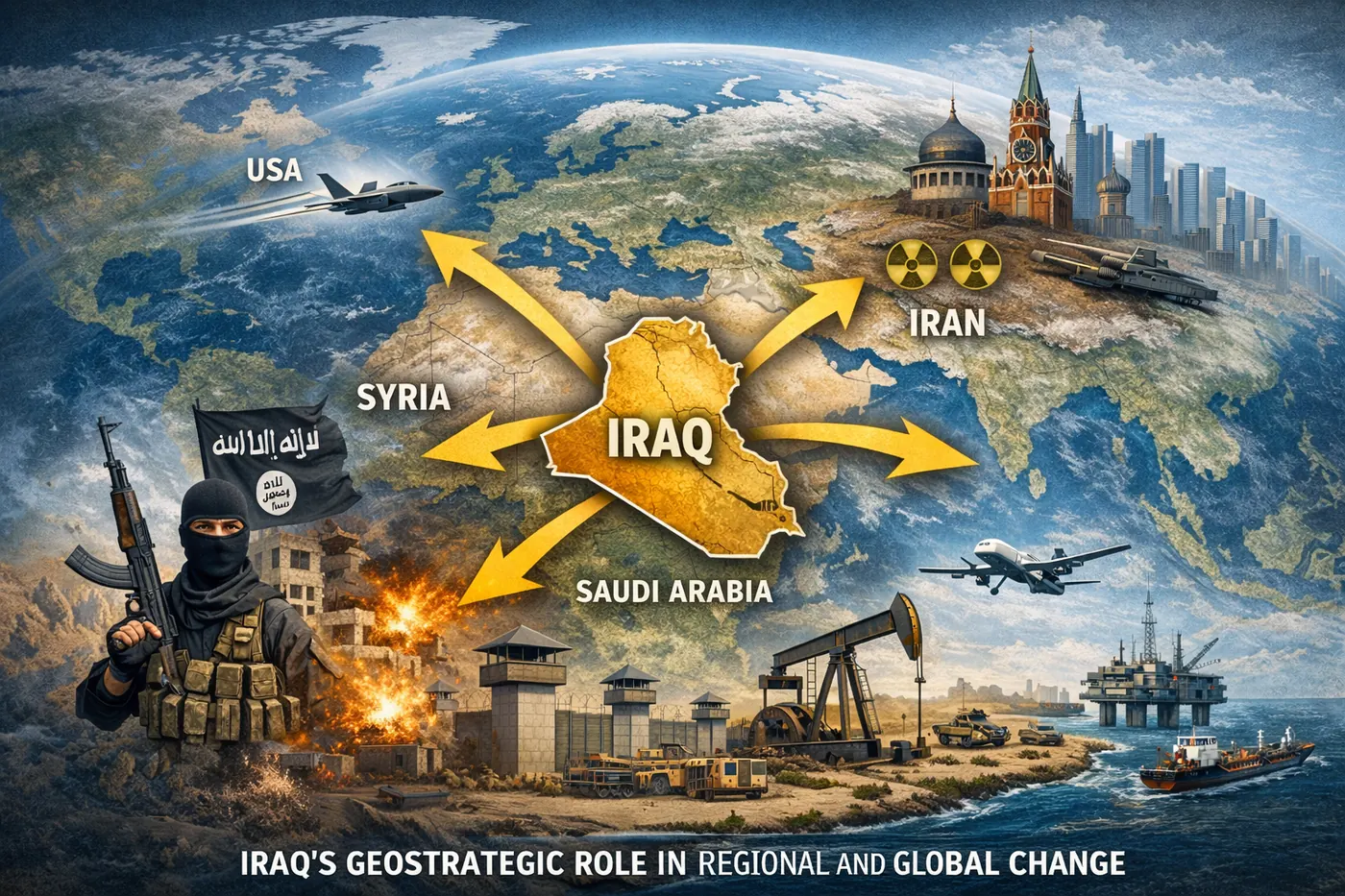
Iraq today stands as a critical intersection of regional and international trajectories. Its geography, political history, and security challenges place it at the center of interactions between global powers and regional actors.
One of the most sensitive challenges remains the issue of ISIS detainees in Syria. Beyond security implications, this file carries political and strategic risks that directly affect internal stability and public trust.
Technology Between Opportunity and Uncertainty
Technology — particularly artificial intelligence — has moved beyond being a supporting tool to become a structural force reshaping economies, labor markets, and public discourse. While this transformation creates unprecedented opportunities for innovation and efficiency, it also raises serious questions about privacy, employment security, and human oversight.
For Gen Z, this moment represents a paradox. It is the most digitally empowered generation in history, yet it operates within systems that demand higher levels of critical awareness than ever before. The challenge is no longer access to technology, but understanding its implications and distinguishing genuine empowerment from gradual displacement.
In this context, technology itself is neither a threat nor a solution. Its impact will depend on governance, digital literacy, and the ability of individuals and societies to adapt responsibly. The choices made today will determine whether technological progress reduces inequality or deepens existing divides.
The coming world will not be easy, but it is not closed. In a prolonged transitional era, adaptability, critical thinking, and continuous learning become essential tools for building sustainable futures.
The World Is Not at War — It Is in Transition
Conclusion
The world is not heading toward collapse, but toward greater complexity. In such an environment, knowledge, awareness, and analytical understanding remain the most effective responses to uncertainty.
At GENZGATE, we believe Gen Z is not merely observing these transformations, but actively developing the awareness needed to navigate and shape the future.
Edited and reviewed by GENZGATE Editorial Team